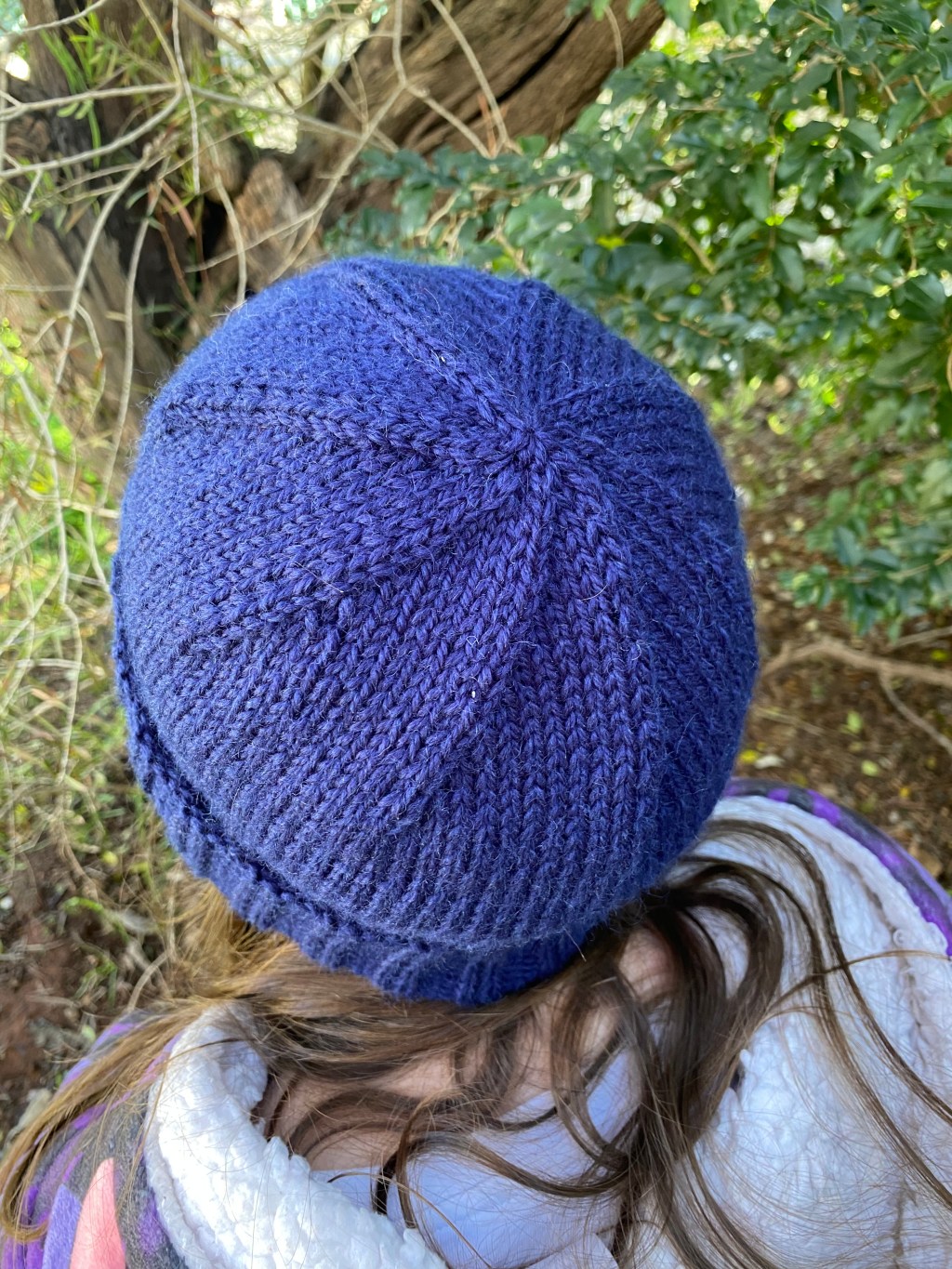
I have always enjoyed knitting beanies.
They are made in the round: seamless, continuous circles—or, more correctly, a spiral. Each stitch depends on the stitch beneath it. The movement becomes familiar and rhythmic: in, around, through and off; in, around, through and off. One stitch at a time, slowly building into a fabric that is warm, stretchy and useful.
There is pleasure in every stage. First comes choosing the project and imagining who might wear it. Plain colours and simple styles suit the more conservative; brighter yarns and intricate patterns invite someone a little more adventurous. Then there is the practical satisfaction of matching needles to yarn, feeling the weight and texture of the wool, and deciding what the finished hat might become.
The cast-on is always a small beginning: a foundation from which something new can grow.
This particular beanie needs no written pattern while I am making it. I make it up as I go, drawing on the knowledge and skill I have gathered across fifty-five years of knitting. That knowledge did not begin with me. It rests on the skills of my mum and grandmothers—skills passed quietly from one generation to the next, through demonstration, repetition and shared time.
Knitting can be wonderfully soothing. Sometimes it is almost mindless, with my hands working while I watch television, talk with someone, or listen to an audiobook. At other times it asks for complete attention: counting stitches, shaping the crown, noticing the tension of the yarn. Either way, the steady rhythm remains: in, around, through and off.
Knitting has also helped carry me through difficult times. During Dad’s battle with cancer, it came into waiting rooms with me. It gave my hands something to do while anxiety gathered, and offered a small, steady point of calm when so much else felt uncertain. A beanie may be a simple thing, but its making can hold patience, care and memory in every stitch.
“I can knit. I knit all year, day in, day out. It is my passion, and I rarely knit the same thing twice the same way.”
Elizabeth Zimmermann’s Knitter’s Amanac
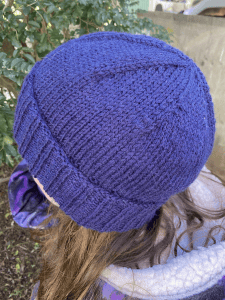
Simple Seamless Adult Beanie Pattern
Abbreviations:
K = knit
K2tog = knit two stitches together
rep = repeat
sts = stitches
Yarn: 2 balls (100 g) Patons Jet 12-ply
Needles:
- Rib: 3.75 mm, 40 cm circular needles or double-pointed needles
- Body and crown: 5 mm, 40 cm circular needles or double-pointed needles
Gauge: 20sts to 10cms over stocking stitch. Check your gauge before beginning, especially if you are adjusting the fit or using a different yarn.
Finished size: Fits an average adult head (55 – 58cm). Adjust the rib and body length to suit the intended wearer.
Brim
With 3.75 mm needles, cast on 96 sts. Join to work in the round, taking care not to twist the cast-on edge.
Work in K2, P2 rib for your preferred brim depth. A folded brim will need approximately 12–15 cm; a shorter brim can be worked to approximately 6–8 cm.
Body
Change to 5 mm needles and knit every round until the beanie measures your desired length. For a standard adult beanie, knit approximately 7–10 cm from end of ribbing, before beginning the crown shaping.
Shape Crown
Round 1: (K10, K2tog); rep to end.
Round 2: Knit.
Round 3: (K9, K2tog); rep to end.
Round 4: Knit.
Round 5: (K8, K2tog); rep to end.
Round 6: Knit.
Round 7: (K7, K2tog); rep to end.
Round 8: Knit.
Round 9: (K6, K2tog); rep to end.
Round 10: Knit.
Round 11: (K5, K2tog); rep to end.
Round 12: Knit.
Round 13: (K4, K2tog); rep to end.
Round 14: Knit.
Round 15: (K3, K2tog); rep to end.
Round 16: Knit.
Round 17: (K2, K2tog); rep to end.
Round 18: (K1, K2tog); rep to end.
Round 19: (K2tog); rep to end. Eight stitches remain.
Leaving a long tail, break the yarn. Thread the tail through the remaining stitches, pull firmly to cinch the crown closed, and sew the end securely on the inside of the beanie. Weave in all ends.
Further reading
- Knitting as Meditation — Meditation Oasis
- Knitting as Meditation — The Woolly Wordsmith
- KnitOM
- Head Circumference Chart
- Elizabeth Zimmermann’s writing on practical, creative knitting and knitting without rigid rules.
“Properly practiced, knitting soothes the troubled spirit, and it doesn’t hurt the untroubled spirit either.”
Elizabeth Zimmermann

