
Is there such an idea as post-consumerism? I think, for me, it is a way of living that comes after the habit of always wanting more.
Embracing slow living means using what I already have and being more intentional about what I allow into my life—whether that is things, places, people, or ideas. It is a quiet shift from accumulation to appreciation; from seeking the next thing to noticing what is already here.
Since retiring, I have stepped away from social media. Facebook and Instagram were useful when I was working, but I felt relieved to leave them behind when that need passed. I have also become more deliberate about the news I consume. I still want to be informed, but I no longer want to spend my days immersed in content designed to provoke outrage, demand a strong opinion, or divide people into opposing camps.
I am tired of the culture of polarisation: the endless insistence that one side must be more right than the other, fuelled by clicks, conflict, and certainty. I no longer want to be the person in the arena, nor the spectator throwing debris—words or bombs—from the sidelines.
Instead, I am choosing to live my own life, on my own side of the street, as they say in twelve-step programs. This is not about judging anyone else for the choices they make. What others do or think is their business. I am simply choosing not to feed the hungry lion of polarisation by joining every argument or taking up a sword of angry justice.
Perhaps some would see this as silence, or as stepping away from problems that deserve attention. But I have come to understand that I cannot live well while constantly carrying the noise and conflict of the wider world. Stepping back is not indifference; it is a decision to protect my attention, my peace, and the small life I am responsible for creating.
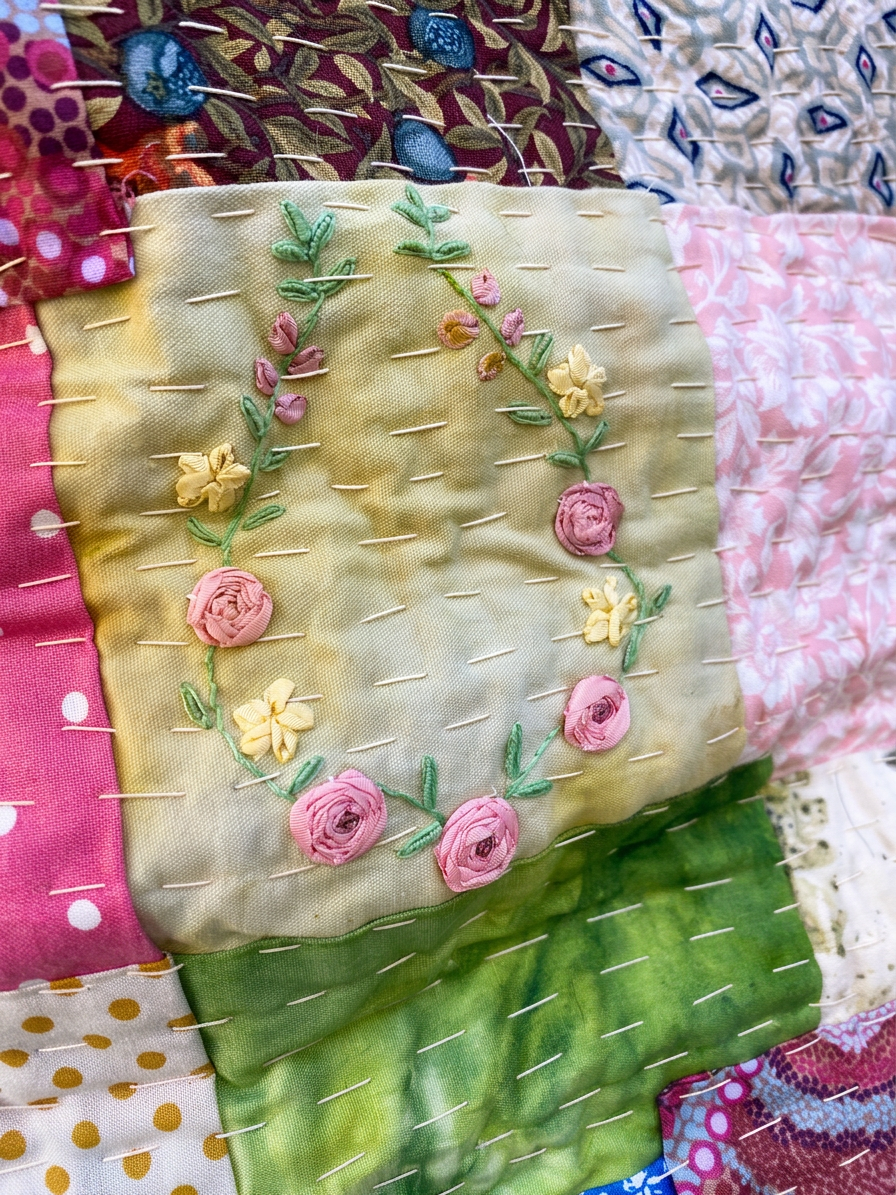
This quilt is part of that choice.
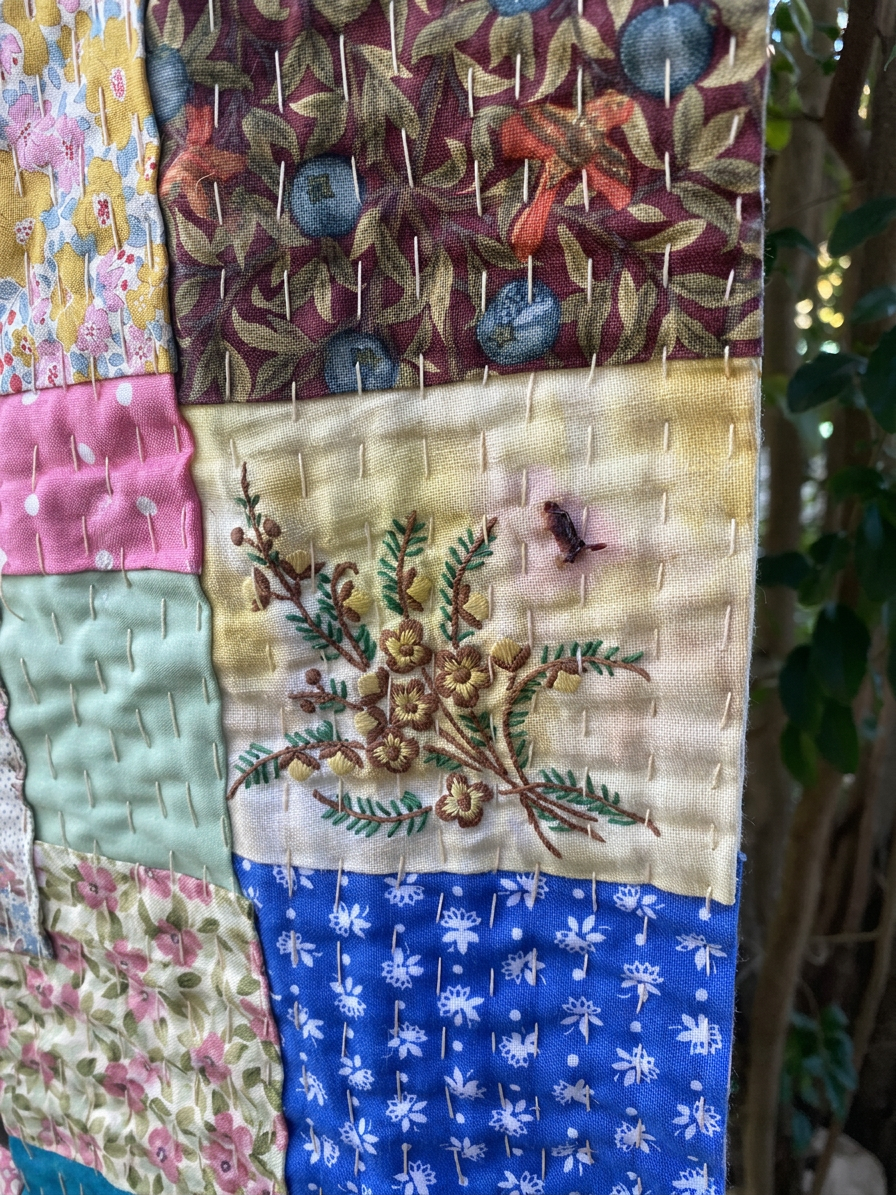
It was made from scraps of fabric already in my stash, including pieces cut from old doilies and embroideries. I used a technique similar to Kawandi, layering the scraps over a calico backing with iron-on batting between them. The raw edges are turned under, then held in place with large, simple straight stitches through all three layers.
The process is slow. It asks for patience rather than perfection. It uses what has accumulated over time and gives it another life. Each fabric holds a different colour, texture, memory, or possibility; together, they become something useful and beautiful.
For me, this is post-consumerism in practice: making do, making again, and finding enough in what I already have.
Resources:
Dear Liza – Kawandi quilt
Post- Consumerism – Wikipedia
What’s the difference between anti-consumerism and postconsumerism?

